Superpositioned
Caught between two lives, a young girl explores the duality of nostalgia while on an eye-opening road trip.
“Please leave a message after the tone.”
“Hey, Dad. I was just checking in. I passed Rochester’s and thought of you.” I chuckled. “Or rather, I thought of Molly the first time you gave her gas station pop rocks to try. She didn’t try new candy for months.” The silence at the other end of the line felt like cotton in my ears, and it made my quiet car feel haunted. I cleared my throat. “Just let me know how Molly is doing, and I’ll call you when I get to the hotel room.” The smile on my face slowly faded, but I kept the pep in my voice. “I love you. Talk to you soon.” I ended the call and turned on some music, hoping to listen to something other than my thoughts.
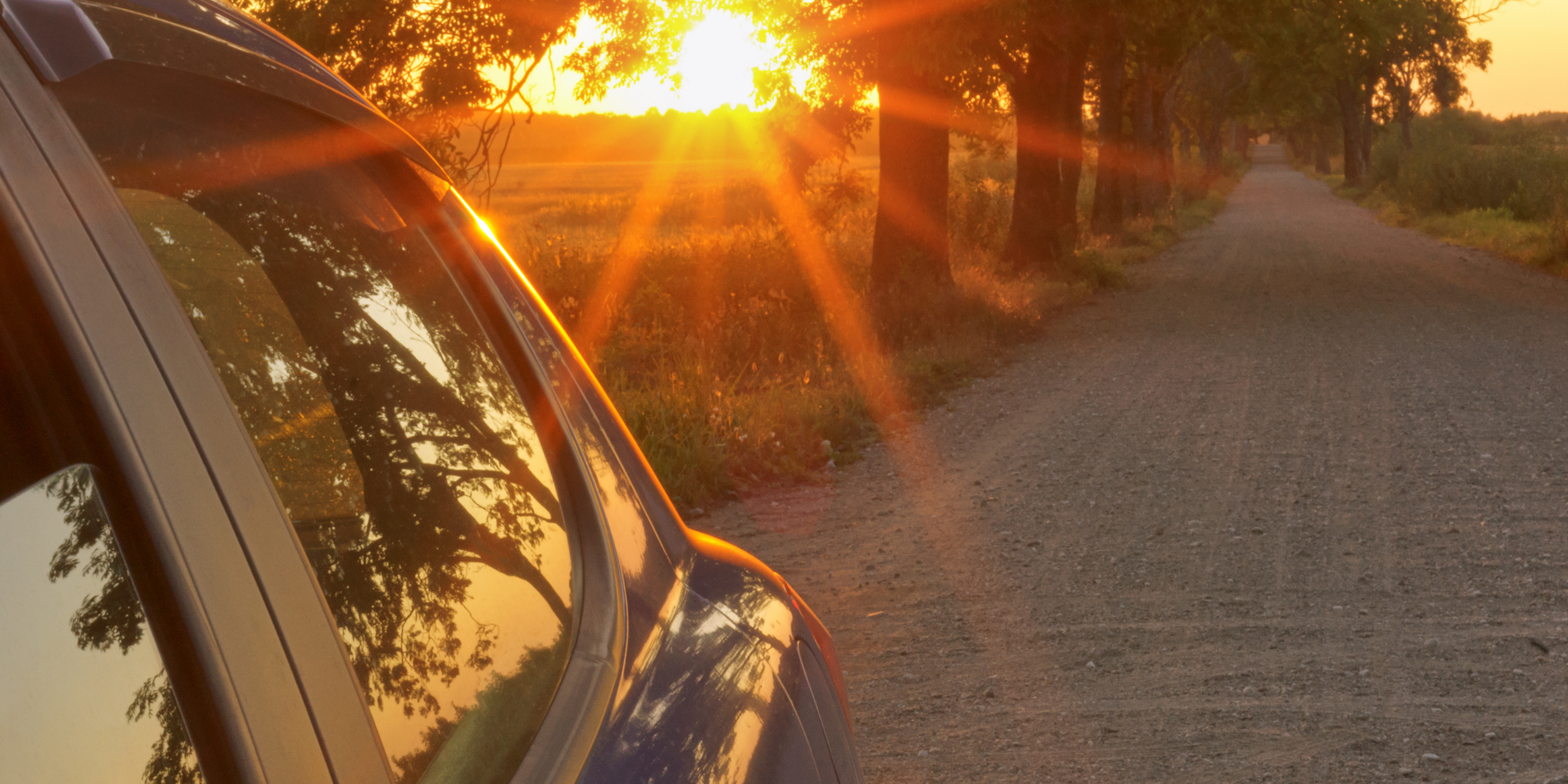
The sunset reflected in the rear-view mirror, drenching the Alabama road in a fiery blush. The light bounced off the silver luggage inside the car, pricking my sight at random. Synthesized 80s beats pulsed from the radio, and the distant smell of burning leaves filled my car. There was always something burning back home in Kambrie. There were no malls and few restaurants. No late-night drive-throughs or movie theaters. Nothing. All we could do for fun was burn leaves around a bonfire with melting s’mores in our hands. My sister, Molly, and I used to make all kinds of specialty s’mores. When we were younger, it was stickier, more vile concoctions, like our classic “Gummy Butter S’more,” which included Haribo gummy bears and chunky peanut butter. It sat so thick in our stomachs that we could barely eat one, and the sweltering heat of an Alabama June made the sugar take on a rather vengeful demeanor as it tried to fight our digestive systems. We became a bit more refined as we grew older. My favorite was our high-luxury “Salted Caramel Delight.” As the name suggests, this involved a bit of Hershey’s caramel drizzled over the marshmallow and sprinkled with salt packets we stole from the frozen pretzels in the fridge. We presented it like it was a cooking show. Sometimes, The Great British Bake-Off, other times Cutthroat Kitchen, but we were always addressing an audience. Our dad was the host and a very brave judge. Even as sugar sludge oozed out of the graham crackers, he would just smile, unhinge his jaw, and give it a taste. We always received a 10/10. Of course, we couldn’t do this every night; I couldn’t imagine the dessert junkies Molly and I would have become. But it was a special Friday night tradition, and we prepared for it the entire week.
We had to scale back on our s’mores once Molly started taking insulin, but Dad still found a way to make her feel included. We simply pivoted to roasting marshmallows instead; it was less sugar and more controlled, but it still felt like Friday nights. Dad knew the exact amount Molly could have, and I’d catch him slyly looking at her glucose monitor, just to make sure all was good. So, I never minded that there wasn’t much to do in Kambrie. I didn’t resent the town for not being more than it was. It was quiet. Peaceful. Home. But Kambrie felt like a prologue, and no one remained in a prologue forever.
I clicked my phone into the cupholder stand and tapped the screen, checking for missed texts. I hated that I let Dad talk me into leaving today, but he wanted me on the road to Nashville hours ago. Images of what happened before I left flashed in my mind. My sister, Molly, was around thirteen when she was diagnosed with diabetes. She played soccer for her middle school team, the Brookside Jaguars, and had gone the entire day without eating because of nerves. I ducked out of my class in the high school hall to bring her some beef jerky during her lunch period, just so she’d have something in her aside from nerves.
“You’ve got to eat, Mols,” I said, pushing the small package toward her. Most of the time she’d listen, but she was different that day. It was the match that determined if they’d move to regionals, and Molly, as usual, was putting all the pressure on herself.
“I’ll be fine,” she said. “We’ll get burgers at Big Wayne’s afterwards.” She smiled at me in a way I found convincing, and I let it go. I should have never done that. The humid air and empty stomach made her blood sugar bottom out, and she passed out on the field. My dad and I ran onto the grass, trying to wake her up. Her eyes just fluttered, and nothing she said made sense. She was rushed to the hospital in an ambulance, and my dad and I stayed in the waiting room for about two hours. She was diagnosed with Type 1 diabetes.
That was about three years ago, but the concern remained strong as ever in my dad and me. Molly would become so frustrated with us because we were constantly checking to see if she was okay. She was sixteen now and felt all the faux independence teenagers wanted. But she didn’t understand what she looked like that day on the soccer field, disoriented and unwakeable. I could never witness something like that again.
But the universe didn’t have the same resolve as I did. Molly’s condition had only grown worse, and seeing her health decline felt like watching a rose wither. She needed treatment more frequently, and she could barely make it through school without feeling lightheaded. I was packing my last suitcase into my car when Brookside called my dad. She had been outside, helping in the school’s garden, when she started getting dizzy. She attempted to walk to the nurse’s office, but passed out before she got there, hitting her head on the concrete. My dad and I were in the car, rushing to the emergency room within seconds.
She was stabilized, but they couldn’t tell how hard she had hit her head yet. They wouldn’t let us see her. We were back in the waiting room, on almost the exact same day she had been here the first time. The image of Molly on the soccer field swelled in my mind.
My dad sighed and turned to me. “Listen, I know you’re worried about her, but I think you should head out.”
My mouth hung open. “What? Like, head home?”
“No, sweetheart,” he said, brushing my hair out of my face. “I think you should head towards school. The interstate is just going to get busier, and you know Nashville traffic. I don’t want you to be exhausted for move-in tomorrow.”
“Dad, please, I can move in another day,” I had said. “School doesn’t start for another week.”
He looked at me, attempting to conceal the concern on his face with his usual, calming smile. “Molly will be okay, Evie. I will call you as soon as she’s out.”
“Dad, she–”
“Will be just fine. You’ve been too excited for this.” He held my hands together; I hadn’t noticed they were shaking until he clasped them together. “Go ahead and go. I will let you know the moment she’s okay.”
That was nearly an hour ago. I tapped my phone again, and was once again greeted with nothing but school emails and retail coupons. I didn’t know what the doctors were looking for, or why they hadn’t found it. Was it just a concussion? A fracture? Was it hard enough for amnesia or bleeding? I knew nothing, and I was just trapped in the car. I was driving away from her, leaving her in Kambrie while I moved on with my life. It was selfish. I was selfish. But I didn’t want to argue with my dad, not in the hospital. I pressed the “Cruise Control” button on my steering wheel and let my car coast at a brisk sixty-five miles per hour on the empty road. My right leg, now untethered from the accelerator, bounced quickly. I shook my head and turned up the music.
Situated at the top of the state, Kambrie stood a couple of dozen miles from the border of Tennessee and Alabama. I always felt like the town was stuck in a state of quantum superposition–not quite Alabama, not quite Tennessee, but firmly in the middle; the principle applied to the look of the city, too. It looked as though it was caught between city and country. Brick storefronts lined the four-way street, displaying a diluted, Victorian-esque design to present a bit of character. People flowed in and out of the mom-and-pop shops, and the three close redlights gave the illusion of city traffic. On either side of the small stretch of stores, however, were unbridled rural plains. I found the greatest appeal of the state to be the way nature was allowed to simply be. Cornfields could grow wildly and stretch for miles without end. Or creeks could splinter in countless directions and connect houses, businesses, and farms–places without commonality sharing the same veins.
My dad would take Molly and me to Splitcrook Creek to fish. There was a dirt pathway in our backyard that connected our house to the creek. We would walk the half-mile into the woods and stand on the bank with wooden fishing poles and a small, white bucket of writhing worms. The smell of creek water and fish was something that stayed in my nose long after leaving. I wasn’t much of a fan of this activity, partly because of the smell and partly because I never caught anything. My dad was a pro, and Molly got the fishing gene from him. We would stay out there for hours, or at least until Dad ran out of protein bars for Molly. They’d probably catch eight minnows each, while I’d still be trying to cast my line. We’d name them all before releasing them back into the creek. One time, I asked why we never kept any of the fish, and my dad patted me on the back. “We’re not going to remove something from their home, Evie. Not even a fish.”
I hadn’t thought of fish feeling a sense of home before, but I supposed it made sense. Even the fish stick together in groves, or schools rather. They recognize their family, and they explore entire oceans with them. Same with birds, cattle, and insects. Same with people. I tapped my finger on the steering wheel quickly. I wondered how Molly was doing and if Dad was okay. I wondered if they would go fishing without me. This would be the first summer I spent without them. I felt like a fish that was separated from the school. I tapped my phone again. Fifteen minutes had passed since I called them. I opened the “Phone” app and went to my recents, my finger hovering over my dad’s contact. He said he’d call me once she was okay. No call meant Molly was not okay. Or maybe he had just forgotten. No, he would not forget to call me. His words echoed in my mind: Molly will be okay, Evie. I will call you as soon as she’s out. I turned my phone off, took a breath, and looked at the road ahead. Molly will be fine.
It was the first time in a long time that the skies were clear. The dusk in Kambrie nearly held a presence on its own. I remember this one sunset–it was so vivid I thought the rapture was coming. The entire neighborhood was bleeding red. The grass was orange, and the houses were soaked in a darkened brown overcast. It was apocalyptic. Most of the time, sunsets were delicate, but this one seemed furious. I was indoors when I noticed it. Molly and I were settling down for dinner when we saw the light flooding in through the sidelites on our front door. It stained the light in our house red, too. I kept waiting to hear trumpets.
I wondered what could affect the sky so strongly that it turned such an intense shade. I became flushed at the littlest things–my skin burned red with emotion. Lately, it was the excitement of moving that kept me pink–the rosy glow of opportunity. Nashville was a town I had idolized since I went with my dad on a work trip years ago. The country music twang, the vibrant nightlife, the rich smell of cigar smoke and barbeque–it was an aesthetic so thick I could taste it. I didn’t look at colleges anywhere else my entire senior year of high school. I had a home calling out to me already, and I wasn’t going to keep it waiting. But seeing the Victorian storefronts dissolve in my mirror made me realize I could pack everything with me except Kambrie. The redness of my face washed away, leaving only a pale cast upon my face. The sky acted similarly. The sun was lower now than before, and the vibrant colors were draining slowly. Maybe the sky was realizing the sun was leaving it, too. Maybe the passion that once made the clouds blush was being chased out by a fear it hadn’t expected.
I fidgeted with my GPS, as the poor internet connection was disrupting my route. This next stretch of road would be dark. Road reflectors and streetlamps were a privilege in Alabama. Some areas were so immersed in darkness that the road disappeared past the reach of the car’s headlights. I didn’t mind the night; honestly, I preferred it. The moon would allow her breeze to brush through the open farmland and overgrown kudzu. Pinpricks of fireflies would pulse at random, and faint mourning doves would sing with the baritone mooing of cattle and the buzzing of cicadas. The sound of mourning doves was the epitome of nostalgia, in my opinion. It was the sound of riding around our three-acre yard on electric scooters with Molly, making up games with chalk dust and old tennis balls until it was too dark to see the vibrant colors of either. It was the sound of our s’mores cooking show and fishing. The sound that the day was over, and dinner was almost ready. The sound of ending before the next beginning. There was a kind of pain in the call, too, and it always occurred in threes. It felt like yearning, hoping. Extending a hand and waiting for it to be taken. I suppose that was what it was, in a way. The doves cried out so that others may hear them. Sometimes to mate, sometimes to signal safety. Sometimes, to do nothing other than communicate. A mourning dove cooed because it was searching for a connection. I don’t think I’ve ever heard a mourning dove coo back.
I gripped the steering wheel tightly, then tapped my phone again. Another ten minutes had passed and still no response. If they were still at the hospital, that meant Molly had been in the emergency room for roughly two hours. What could doctors not find in two hours? Or maybe they had found something, and my dad didn’t know how to tell me. I knew him. He wouldn’t want me to turn around or become distracted on the road. But I was distracted. I couldn’t think about anything else, even with the music beating loudly in the speakers. Though my sister and I had not ridden on scooters or played with chalk dust in years, I found myself grieving the memory as though I had just lost it. Maybe I had. It’s hard to know when something has happened for the last time. One day, my father sat me down and never picked me back up. I played with my imaginary friend one final time and never said goodbye. I rode scooters with my sister and never touched them again. And I couldn’t even remember when. Moving to Nashville meant my entire line of communication with my family was going to be dependent on a call; any form of connection would be dictated by their calling back. Even now, with Molly in the hospital, I couldn’t just turn to my dad and talk. I had to wait for my phone to ring. We weren’t doves, though; we were people. Surely, we’re better than the birds. Molly will be okay. Nashville will be fun. I will be fine.
As the night continued, stars began to speckle the dark sky, twinkling in tandem with the pulsing music on the radio. The road out of Kambrie was a long stretch of untouched nature, aside from the walls of cut stone lining the interstate. There weren’t many mountainous roads where I lived, but I-65 to Nashville was surrounded by the cadaver of one. I was fascinated by the stone as a child. With the sharp, vertical lines and terracotta-esque coloring, I felt like I was living in the Grand Canyon. My dad burst that bubble when he informed me it was just the remnants of a demolition site. A construction crew needed to build a road, so they blew a hole in a rib of Mother Nature. I didn’t like that. It felt invasive, entitled. A kind of “we need something, so we’re going to destroy you to get it” mentality. A mountain is going to exist regardless; it’s not really something to be destroyed completely, but I suppose that doesn’t protect it from pain either. It loses pieces of itself, just as we do. But it can’t call out like a mourning dove. It just crumbles in silence.
Tears brimmed in my eyes. Maybe I was making a mistake. Maybe I was doing the same to my family. “I want something, so I’m going to leave you behind to get it.” Did my dad tell me to leave as a test? To see how much my family meant to me? He wouldn’t do that. That wasn’t who he was. But what I was doing was selfish. I should have fought harder. I should have just said, “No, I’m staying here until Molly’s okay. Nashville isn’t worth leaving Kambrie.” I wouldn’t blame them if they didn’t call back–if I were the dove searching for a connection, only to be greeted with crickets and cicadas. My veins became frigid with fear, and the color drained from my face. My breathing quickened, and I could feel my heart beating rapidly. I pulled over and parked on the shoulder, placing my hand on my chest in an attempt to calm myself. I could feel panic pulsing in every inch of my body. My head twinged in pain, and the bottom of my ribs ached from my hyperventilating. I couldn’t calm myself. I looked around, searching for something to focus on.
I used to have panic attacks like this when I was younger. I’ve never been a good test-taker, but they used to make me physically sick. Math was always the worst subject. Even doing practice work at home could make me hyperventilate. My dad, who was always right there beside me, helping me with fractions and division, would tell me to focus on his wedding ring. It was a simple, gold band, tarnished from the years of wear. My mother passed away in childbirth while delivering Molly. I was three years old, so anything I remembered about her felt more like a dream rather than a memory. But my dad made sure we knew all about her. The way she giggled at the geese that collected in parking lots near Splitcrook Creek. The way she’d move with my hands to the beat of music while my dad drove around Kambrie. The way she excitedly decorated the nursery for Molly. Looking at his wedding band felt like I was looking at her, seeing these moments as my own. It calmed me down every time.
But my dad wasn’t here, and neither was his wedding band. I needed to find something else. I looked around, searching for anything I could fix my eyes on. My gaze landed on a small diner pressed against the rock across the road, the outside lights flickering faintly. I put the car in drive and headed towards the restaurant.
I parked in the small lot and went inside. A small bell jingled as I opened the door, and the wooden floors creaked beneath my step. The smell of hamburgers and waffles filled my nose, and my breathing slowed slightly.
“Just you, hun?” a waitress said, grabbing one menu.
“Yeah, just me.” I pinched my hands, trying to focus on the pain rather than the worry that sat thick in my chest.
“Right this way.” She led me to the back of the restaurant and placed me in a small booth against a large windowpane. Had there been daylight, there would have been a beautiful view of the Grand Canyon-esque rock, but night had consumed it all. I sat down, and the waitress placed a menu in front of me. “I’ll be right back for your order.”
I nodded and looked at the options. The place was called “Split Rock Diner.” It was an apt name for a few reasons. The mountain was split, and the diner rested a few miles out from the stateline between Tennessee and Alabama, thus splitting the states. I scoffed as though I had just heard one of my dad’s nerdy puns. I traced the menu with my finger. I noticed my hand was trembling, and wondered if this is what Molly felt like before her sugar dropped–shaky, cold, and a throbbing headache. Just the bit I was experiencing was too much for me. I tapped my finger on the table quickly, and my leg bounced with it. My panic was somewhat masked, but I could feel it all inside my skin.
The diner reminded me of home. The name sounded like the creek we fished at, but it also looked like a breakfast place I would go to with my dad. He would always get the waffle and egg plate, and I would get biscuits and gravy. We’d wash it down with water and grab a vanilla milkshake to-go. This diner had similar options. I felt like I was back home, and my dad was just in the bathroom. I tapped my phone again, greeted again with no response.
“Know what you’d like yet?” the waitress said, shaking me from my thoughts.
“Oh, uh, yeah. Can I get waffles? With eggs?” My hand trembled as it pointed to my order.
“Sure can. What to drink?”
“Just water. Thank you.” I folded my menu, handed it to her, and watched her disappear. I looked around the restaurant. It was the typical twenty-four-hour American diner–oak panel walls and wooden tables to match, booth seating covered with crimson cushions, and a juke box that played country hits from the past decade. A few people sat sporadically in the space, chatting quietly. Eager for a distraction, I unlocked my phone to check the emails I had gotten from my school before getting on the interstate.
Nothing I clicked would load, and a “Connect to WiFi” alert kept appearing on my phone. Annoyed, I went to “Settings” and connected to the diner’s free internet. This was probably the only spot for two hours where there would be any real service. Businesses became pretty sparse on the roads between cities in the South. It was nice to unplug from society for a bit and just drive. That is, until I’m having a panic attack in my car.
A few minutes passed, and my phone erupted with notifications–all from my dad. Twelve missed texts and three missed calls–my heart sank into the seat. I didn’t bother to read the texts. If something happened, I needed to hear it from my dad. I fumbled with my phone, nearly dropping it in my haste, and pressed my dad’s contact. It rang once. Then again. Then again.
“Evie? Where are you? Are you alright?” His voice was urgent and rushed. “I’ve been trying to get a hold of you for nearly forty minutes.”
I panted out the best I could, “Dad. Y-yeah, I’m on 65. The service isn’t–I wasn’t,” my words fell out of my mouth and tangle in the air they filled. My heart returned to its rampant pace from the car, and my breathing made me lightheaded. I thought again about how awful Molly must feel during her episodes. “How’s Molly? What did they say?”
“Eve, take a breath.” My dad only calls me “Eve” when it’s something serious. Tears pricked my eyes. I turned towards the window, facing away from the people, and lowered my voice.
“Dad, what happened? I–”
“Breathe.” My dad inhaled deeply, and I did the same with him. He did it two more times before continuing. “Molly is fine.”
All the tension that had made my veins tight loosened. I nearly slumped over in my seat, and a fatigue I hadn’t noticed weighed on my eyelids. It was relief in its most physical presence. “She’s fine,” I repeated. I placed a hand to my chest, calming my breathing again.
“I tried to get a hold of you earlier, but the call kept dropping. I was about to get in the car and drive to Nashville myself.”
I chuckled. “I’m sorry.”
“It’s not your fault, baby. Where are you now?”
“A diner,” I sniffled. “It’s called ‘Split Rock.’”
“That’s a perfect name.” My dad laughed as I knew he would. “Yes, Molly’s fine. She has a concussion, but it’s nothing a few days of rest can’t fix.”
I looked up. Physically, I saw the wood-panel roofing, but visually, I saw the stars. “Thank God.”
“She’s sleeping right now, so I’ll call you tomorrow and let y’all talk.”
“Okay.” I nodded even though I knew he couldn’t see it. The waitress came, set my plate down in front of me, and disappeared again. Silence filled the line. “Dad, I don’t know about this.”
“What do you mean?” I picked at my food, searching for the right words to say.
“I don’t know if I can go through with this. Being so far from home, from you and Molly.” I took a breath. “Maybe I should come back to Kambrie and go to school there.”
My dad hummed. “How come?” I spoke for what felt like hours. I told him about the doves and the mountains. I told him about riding scooters and making s’mores with my sister. I told him about the rapture sun and my flushing face. And I told him I wanted him to hold me again. At some point, I had begun crying, but I didn’t realize it until I stopped speaking. I inhaled, like my dad had instructed me before, and fixed my eyes on a poster of a sunrise to fight my simmering panic attack. “How can I just leave y’all? Especially after this?”
“Eve,” his voice cracked, and he inhaled deeply. “I know you can’t see them, but think about those mountains. Do you remember what I told you?”
I sniffled, wiping my face with my sleeve. “What, that it wasn’t the Grand Canyon?”
He chuckled. “No, not that, after. What they found after they began tearin’ it down.”
“Um, with the geodes or something like that?” My stomach grumbled deeply. I took a fork and bit into the scrambled eggs that had grown cold.
“Close,” he said. “When they began the demolition, they found rock that dated back hundreds of millions of years. How cool is that?” His voice was laced with excitement.
I chuckled, “That’s pretty cool, Dad.”
“Geologists had a field day and took all sorts of samples from the rumble. And they found some amazing stuff inside it.”
“Dad, I don’t really see how this–”
“Listen, Evie. Even a mountain can be brought to its knees with enough pressure,” he paused. “But had the rock never crumbled, its true worth inside would have never been brought to the surface and seen. It would have kept all its potential sealed up, and nothing would have been done with it.”
A laugh escaped my lips; I didn’t understand why. My dad laughed with me. “You can’t put your life on hold because of what’s comfortable. There’s always gonna be something that wants to keep you stuck.”
I smiled. He always had the right words. From fish to rocks, he knew how to see something differently, and he knew how to make me feel it. “I guess so.”
“It’s just a part of life, baby,” he continued. “You go and start yours. Molly and I will be on the other side of the line, cheering you on. And we’ll be just fine.”
A peace washed over me, and my breath slowed. I plucked a napkin from the metal canister on the table and patted my face, looking at my reflection in the silver. My crying had left my cheeks a bright red. Even though it was anguish that brought me here, I was glad to have my color return. I looked like myself again. Passionate. Bright. Emotional. I finished my plate, left some money on the table, and returned to my car. A blueish haze filled the sky, slowly chasing off the night. I pulled out of the lot and began driving forward, ending the call with my dad before the poor service did it for me. I felt the excitement I had about Nashville return.
I tapped my steering wheel with the music, adrenaline replacing my anxiety. I looked at the road ahead, turning over what my dad had told me in my mind. Maybe we have to be broken down to reveal something more beautiful inside of us. Something changes in the atmosphere, and we burn red with passion. Isolation becomes heavier in the night, so we call out to the other doves. We insulate ourselves with walls of stone, so someone has to come in and break them down. It’s nothing to lose oneself over. It’s just another thing to overcome.
The navy sky was slowly becoming brighter as the night continued. In the distant horizon, the tip of the sun began to peek over the mountains, and the fiery leakage once again filled the sky. It was like a sunset, but different. It was pinker. Brighter. More delicate. The sky held no intensity but rather a soft compassion, as though I was being called forward. As though it was cradling me. I missed the Kambrie sunset in my rear-view mirror, and I will visit it once again, but the Nashville sunrise was in front of me. I could finally see the dawn.